
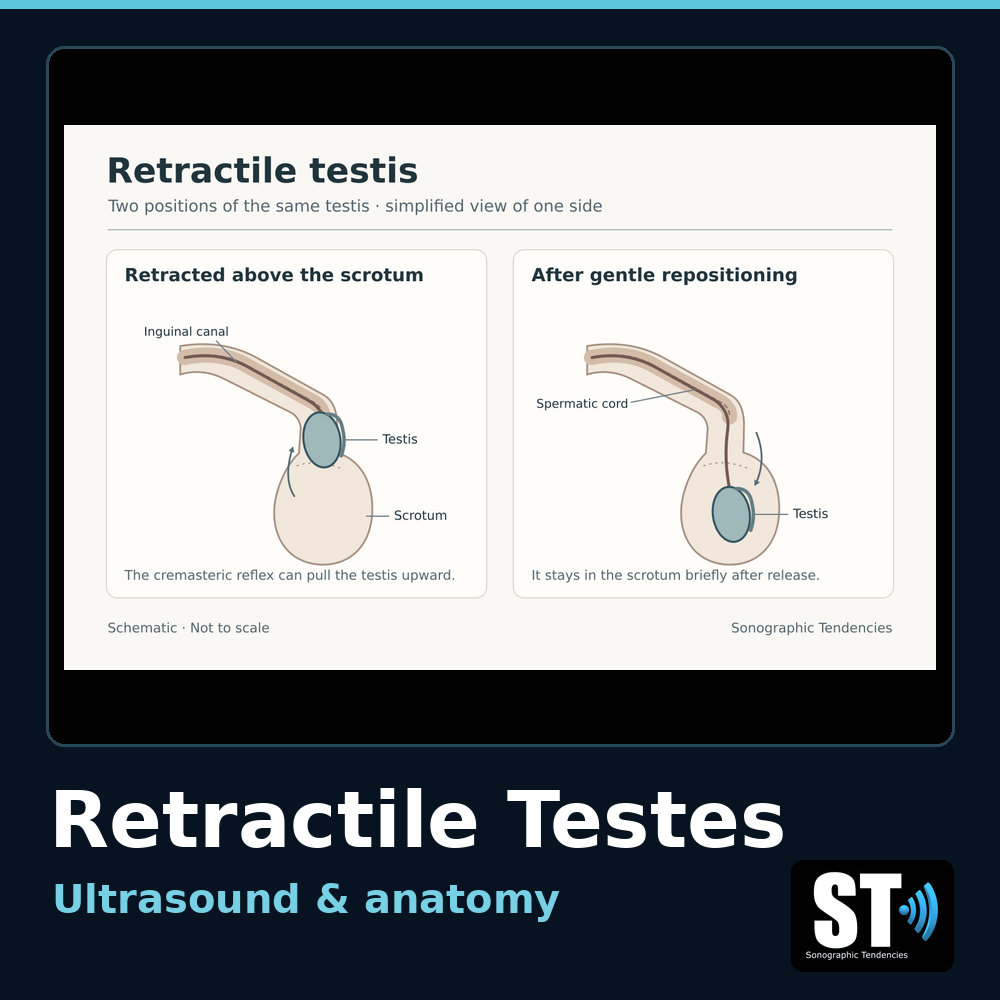
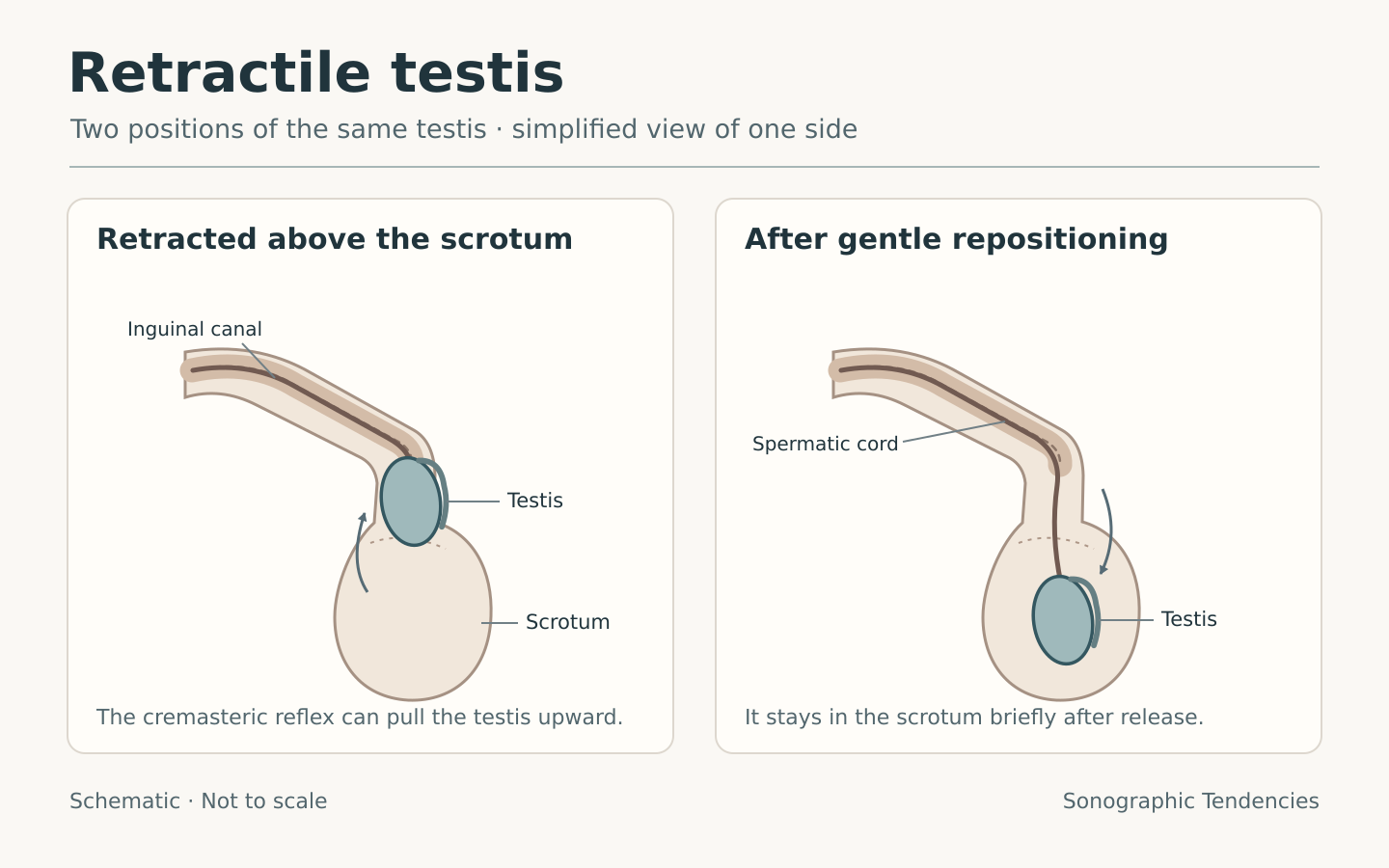
A retractile testis has descended into the scrotum but can temporarily move upward with the cremasteric reflex. On physical exam, it can be brought into the scrotum without tension and stays there at least briefly after release. A testis that cannot be brought into the scrotum or immediately retracts after release warrants clinical assessment for an undescended or ascending testis.
What to document on ultrasound
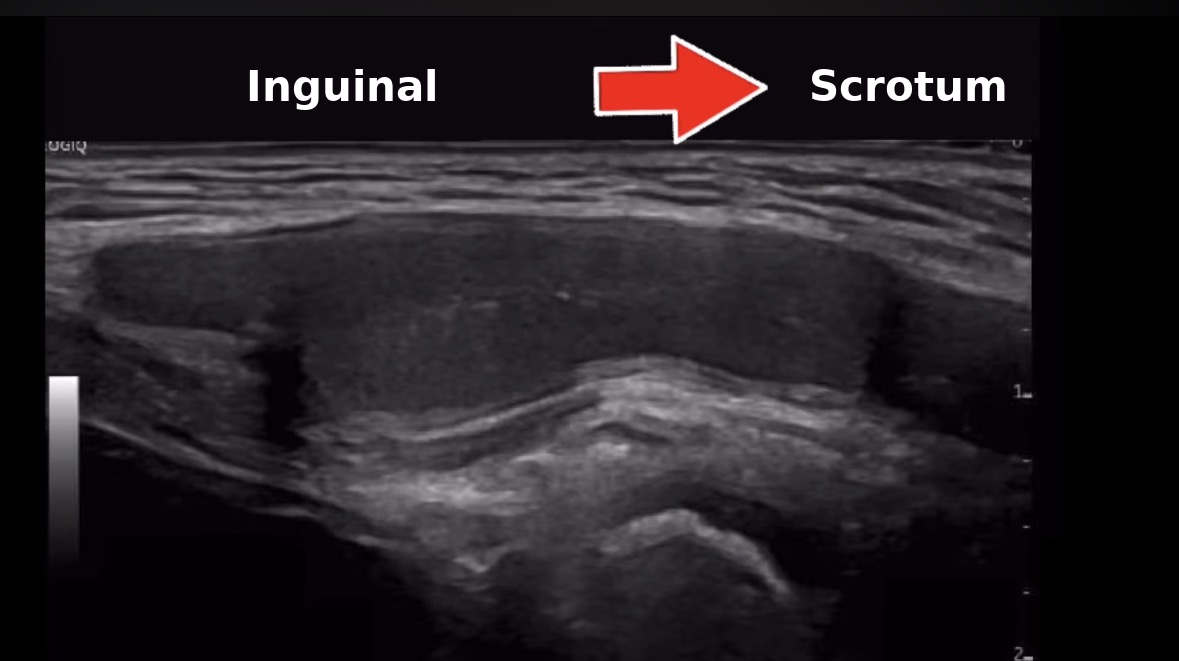
If you see the testis change position during the exam, document where it was first seen and where it moved. For example, if directly observed: “The right testis was initially visualized in the inguinal canal and subsequently moved into the scrotum during the examination.” The physical exam determines whether the testis is retractile.
Clinical follow-up
The American Urological Association recommends assessing testicular position at least annually in children with retractile testes to watch for secondary ascent. It also advises against routine ultrasound before referral for suspected undescended testis.




Leave a Reply